Apprenticeships & Skills Over Degrees: Why It Works in Today’s Economy
The Shift Away from “Degree = Success”
For decades, society sold one version of success:
Go to university → get a degree → climb the corporate ladder → retire.
But Gen Z—and many Millennials—are challenging this narrative.
Rising tuition costs, underemployment among graduates, AI disruption, and burnout culture have made one thing clear: a degree is no longer the only—or even the best—path to success.
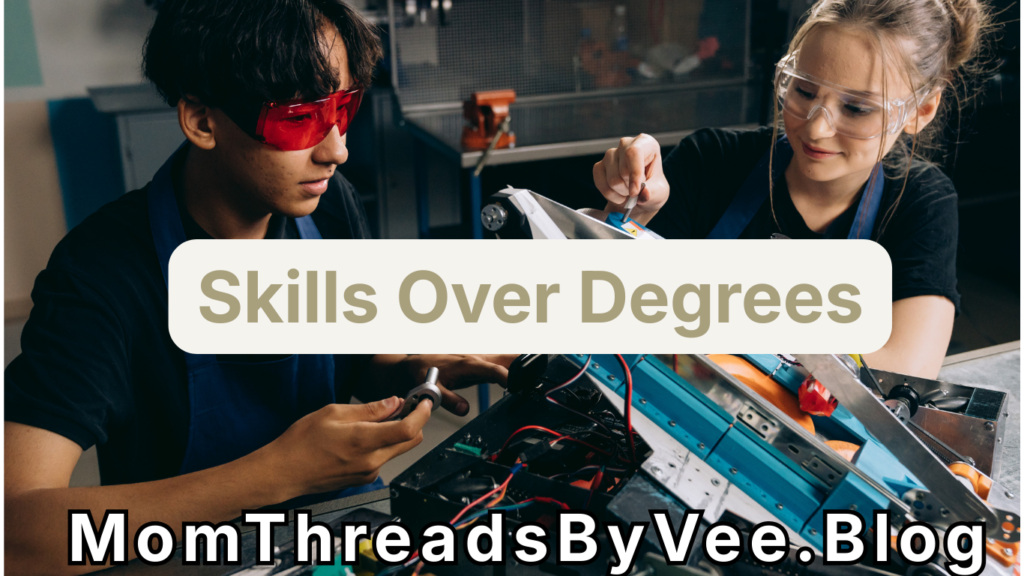
Instead, apprenticeships, trade skills, and hands-on learning are emerging as powerful, flexible, and profitable alternatives. In today’s skills-driven economy, what you can do often matters more than what certificate you hold.
Why Skills-Based Careers Are Winning Right Now
- Skills Create Faster Income Opportunities
Unlike traditional degrees that require 3–6 years before payoff, skill-based paths often allow people to earn while they learn.
Examples include:
- Paid apprenticeships
- Freelance or contract work
- Trade certifications completed in months
- Digital skills monetized online
This makes skills-based learning especially appealing for young adults, parents, and career switchers.
- Employers Are Prioritizing Competence Over Credentials
Major companies are removing degree requirements for many roles, focusing instead on:
- Demonstrated skills
- Real-world experience
- Portfolio-based proof
Fields like tech, design, marketing, skilled trades, and creative work reward ability over theory.
Real Success Stories From Skills-Based Careers
- The Web Developer Without a Degree, Many self-taught developers learned through:
- Online bootcamps
- Open-source projects
- Apprenticeship-style junior roles
Today, they earn competitive salaries working remotely, freelancing, or running agencies—often without student loan debt.
- The Electrician Turned Business Owner
Trades like electrical work, plumbing, carpentry, and HVAC offer:
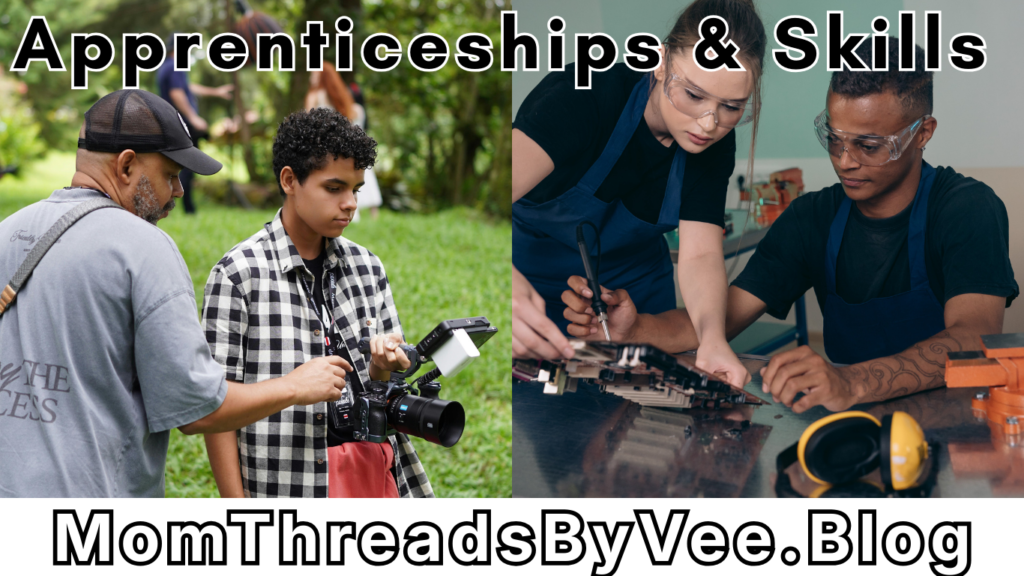
- Paid apprenticeships
- High demand globally
- Clear pathways to business ownership
Many skilled tradespeople eventually build companies, hire teams, and enjoy financial stability outside corporate environments.
- The Content Creator & Digital Entrepreneur
Bloggers, Pinterest managers, social media strategists, and virtual assistants learn through:
- Practice
- Online courses
- Trial-and-error execution
These skills grow into scalable income streams—sometimes alongside parenting or other businesses.
How to Find Apprenticeships or Trade Opportunities
- Local Trade & Technical Institutions
Check:
- Vocational training centers
- Polytechnics
- Community skills hubs
These often partner with employers for hands-on placements.
- Online Apprenticeship Platforms
Search for:
- “Paid apprenticeships near me”
- “Skills-based training programs”
- “Remote apprenticeships”
Fields like digital marketing, UX design, data analysis, and IT support increasingly offer remote apprenticeship models.
- Learn → Practice → Pitch
If formal apprenticeships aren’t available:
- Learn the skill
- Build small projects
- Offer your services at entry-level rates
This self-created “apprenticeship” can quickly lead to paid opportunities.
Balancing Skill-Building With Entrepreneurship
One of the greatest advantages of skills-based careers is flexibility.
You can:
- Learn a skill part-time
- Monetize it alongside a small business
- Turn it into a side hustle
- Grow it into a full-time venture
For example:
- A fashion store owner learning digital marketing
- A stay-at-home parent offering virtual services
- A student building an online brand while learning
Skills give you control over time, income, and growth pace.
Redefining Success Outside the Corporate Ladder
Success doesn’t have to look like:
- Corner offices
- Job titles
- Long commutes
- Burnout culture
For many, success now means:
- Sustainable income
- Work-life balance
- Location freedom
- Time with family
- Purpose-driven work
Skills-based careers allow people to design lifestyle-aligned success, not just professional status.
Is a Degree Still Valuable?
Yes—but it’s context-dependent.
Degrees are still essential in:
- Medicine
- Law
- Engineering
- Academic research
However, for many modern careers, a hybrid approach works best:
- Skills first
- Experience second
- Credentials as optional support
The future belongs to adaptable learners—not just degree holders.
How to Apply This Mindset Today
- Identify a skill in demand
- Choose learning resources (courses, mentorships, practice)
- Apply immediately—don’t wait for perfection
- Build proof through projects
- Monetize early and improve continuously
Final Thoughts: Skills Are the New Currency
In today’s economy, skills are portable, scalable, and resilient.
They:
- Travel with you across countries
- Adapt to new industries
- Create multiple income streams
- Reduce dependence on a single employer
Whether you’re Gen Z, a parent, or a career switcher, choosing skills over degrees isn’t about rejecting education—it’s about choosing practical empowerment.
You May Also Like:
From Store Owner to Mompreneur: Building a Career Lily Pad
Daily Habits for Balancing Mom and Boss Life
The New Stay At Home Mom. Earning, Learning and Thriving Mom.